【For Grade 3】HOW TO PRACTICE and SCORE EIKEN SPEAKING

QR Code
Read by a smartphone
NOTE: The information on this page is based on Aplus assumption and does not guarantee accuracy.
※このページの情報はえいぷらの想定に基づくものであり、正確性を保証するものではありません。
Scoring Cheat Sheet
| Category | Max Score | Evaluation Points |
|---|---|---|
| Reading | 5 |
|
| Q & A | 25 |
|
| Attitude | 3 |
|
| Total Score | 33 | |
| Score to pass | 20+ |
| Speaking (33) | |||||
|---|---|---|---|---|---|
| Reading (5) | 1 | ||||
| Pronunciation Correct pronunciation of individual words. |
+1 | ||||
| Stress Use natural stress patterns within words and sentences. |
+1 | ||||
| Intonation Use rising and falling tones appropriately for questions and statements. |
+1 | ||||
| Pacing / Rhythm Read at a natural speed without sounding rushed or robotic. |
+1 | ||||
| Clarity / Smoothness Speak clearly with smooth transitions between words. |
+1 | ||||
| Q&A (25) | 1 | 2 | 3 | 4 | 5 |
| Pronunciation Clear and natural pronunciation. Speaking more helps show accuracy. |
Many mispronunciations | Frequent mistakes | Some mistakes, mostly clear | Mostly accurate | Clear and natural throughout |
| Understanding of the question Answers should reflect the question. Full sentence responses are ideal. |
Little or no relevance | Partially relevant | Generally answers the question | Good understanding shown | Fully relevant and clear |
| Grammar accuracy Use correct sentence structure and verb forms. |
Frequent basic errors | Some basic errors | Occasional errors | Mostly accurate | Consistently accurate |
| Logical structure Include opinion → reason for best results. |
No structure | Minimal structure | Some logical flow | Clear structure | Well-organized and cohesive |
| Vocabulary use Use varied and topic-specific vocabulary. |
Very limited vocabulary | Basic words only | Some variety | Good variety and accuracy | Rich, appropriate vocabulary |
| Attitude (3) | 1 | ||||
| Effort to listen Shows active listening, eye contact, and response timing. |
+1 | ||||
| Clear and confident Speaks with confidence and natural tone. |
+1 | ||||
| Willingness to speak Tries to speak fully even when unsure or nervous. |
+1 | ||||
| スピーキング(33点満点) | |||||
|---|---|---|---|---|---|
| 音読(5点) | 1 | ||||
| 発音 単語ごとの正しい発音。 |
+1 | ||||
| ストレス 語や文中の自然な強勢。 |
+1 | ||||
| イントネーション 疑問文や平叙文における適切な抑揚。 |
+1 | ||||
| 速さ / リズム 不自然に速すぎたり、ロボットのようにならない自然なスピード。 |
+1 | ||||
| 明瞭さ / なめらかさ 単語の間をスムーズに、はっきりと発音する。 |
+1 | ||||
| 質問応答(25点) | 1 | 2 | 3 | 4 | 5 |
| 発音 クリアで自然な発音。多く話すことで精度が伝わる。 |
誤りが多い | 頻繁な誤り | 多少誤りあるが概ね明瞭 | ほぼ正確 | 一貫して自然で明瞭 |
| 質問の理解 質問に沿った回答が求められる。フルセンテンスが理想。 |
ほとんど関係ない | 一部関連 | 大まかに答えている | 8割以上理解している | 明瞭に答えている |
| 文法の正確さ 正しい文構造と動詞の形を使う。 |
基本的な誤りが頻発 | いくつか基本的な誤り | 時々誤り | ほぼ正確 | 一貫して正確 |
| 論理構成 意見→理由の構成が理想。 |
構成なし | 最小限の構成 | 一部論理的 | 明確な構成 | 組織立っていてまとまりがある |
| 語彙の使用 多様でトピックに即した語彙を使う。 |
非常に限られた語彙 | 基本語のみ | 多少のバリエーション | 適切で多様な語彙 | 豊かで適切な語彙 |
| 態度(3点) | 1 | ||||
| 聞こうとする姿勢 積極的なリスニング姿勢、アイコンタクト、タイミング。 |
+1 | ||||
| 明瞭で自信のある話し方 自然なトーンで自信を持って話す。 |
+1 | ||||
| 話そうとする意欲 不安や自信がない時も話す努力をする。 |
+1 | ||||
Basic Speaking Information
The most effective resource to prepare for the Eiken grade 3 Interview is the official virtual tool available here.
*EIKEN Virtual Second Stage Interview, https://www.eiken.or.jp/eiken/exam/virtual/grade_3/ , 2025, Eiken Foundation of Japan
| Eiken grade 3 Interview Steps |
|---|
| 1) Enter the room |
| 2) Hand over the interview card |
| 3) Take a seat |
| 4) Confirm your name and test level, and greet the examiner * The examiner asks name, grade, and begins greeting |
| 5) Receive the question card * The examiner passes the question card |
| 6) Read the passage silently (20 seconds) * The examiner tells the student to prepare |
| 7) Read the passage aloud * The examiner tells the student to read aloud |
| 8) Answer a question about the passage * The examiner asks a question |
| 9) Answer a question regarding picture 1 * The examiner asks a question |
| 10) Answer a question regarding picture 2 * The examiner asks a question |
| 11) Turn over the question card * The examiner tells the student to turn over the card |
| 12) Answer a personal question 1 * The examiner asks a question |
| 13) Answer a personal question 2 * The examiner asks a question |
| 14) Return the question card to the examiner |
| 15) Leave the room |
PRACTICE
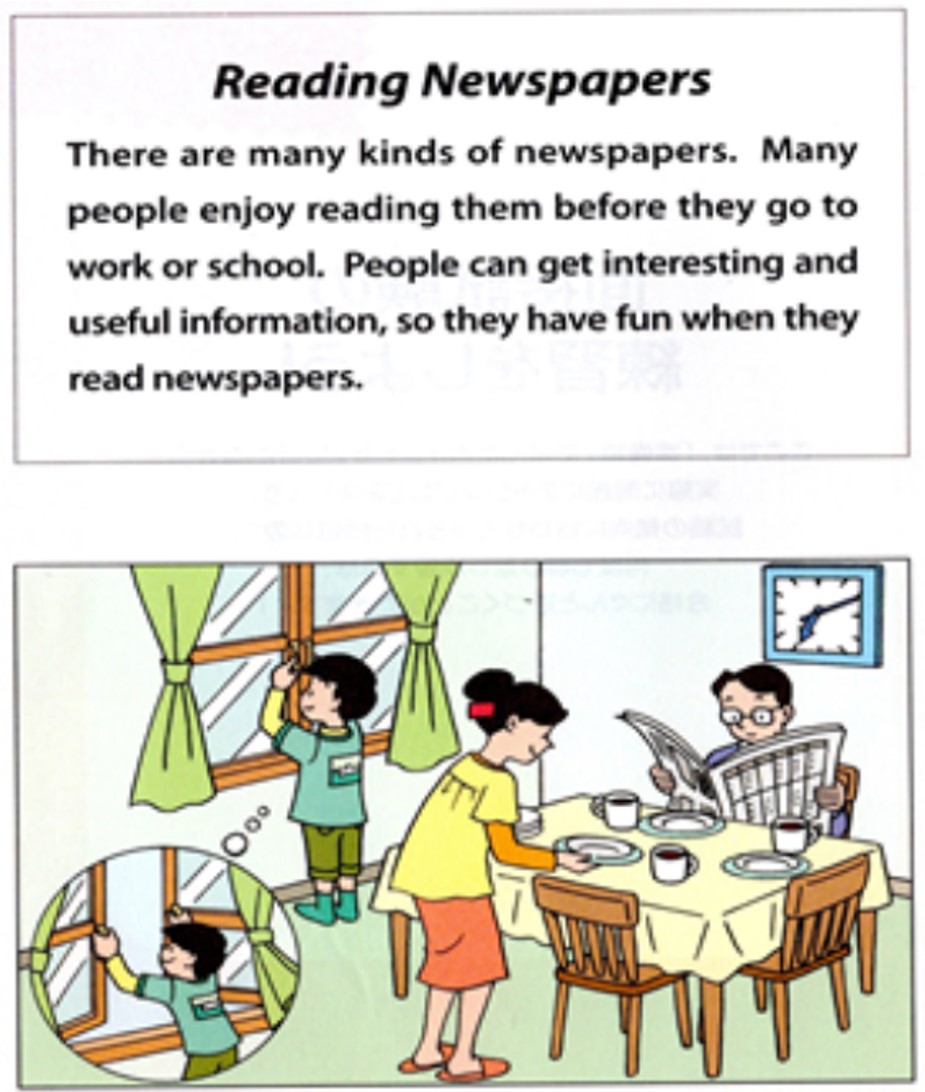
| Section | Interviewer | Student |
|---|---|---|
| Question about the passage | What can people get from newspapers? | People can get information from newspapers. |
| Question about the picture 1 | What is the boy going to do? | He is going to open the window. |
| Question about the picture 2 | How many cups are there on the table? | There are three cups on the table. |
| Turn over the card and move to personal opinion question | ||
| Personal Question 1 | Do you have any pets? | Yes, I have a dog. |
| Personal Question 2 | What's your favorite food? | My favorite food is pizza. |
Your Scoring Memo
Tips
◆ The Basics
Eiken grade 3 interview passing ratio is considered exceeding 80% (no official info).
A major reason for failing is going silent.
Speak clearly and loudly.
If you don’t understand a question, say “Pardon?” or “Please say again.”
*But try not to ask more than once per question.
If you need time to think, say “Let’s see...” or “Well...”
Remember: Mistakes don’t subtract points. The more you speak, the more points you can earn!
◆ How to Practice for the Speaking Test
Practice with these key points in mind to boost your score.
Please practice following this flow:
| Scoring Points and Practice Tips for Reading Aloud |
|---|
|
◆ Three Key Points 1. Read clearly and loudly 2. Pause naturally where needed 3. Focus on pace and pronunciation OK if you don’t understand at first! Use predicted templates and practice from top to bottom. AI feedback will help improve your pronunciation. Practice |
| Scoring Points and Practice Tips for Illustration Tasks |
|---|
|
◆ Three Key Points 1. Listen for the first word in the question 2. Use full sentences with subject + verb 3. Use pronouns (he, she, they) after “so” OK if you don’t understand at first! Practice from top using templates + AI feedback. Practice |
| Scoring Points and Practice Tips for Expressing Opinions |
|---|
|
◆ Three Key Points 1. Answer in full sentences with subject + verb 2. Don’t use Japanese! 3. Speak clearly and confidently ※ OK to ask once per question if unsure: “Pardon?” There are common question patterns to get used to! Practice top-to-bottom with AI feedback. Practice |